I decided to read a famous play called "12 Angry Men". To me in this play there is an untold story. Sadly, in this play the twelve men do not have names they go by numbers. These men are jurors for a murder trial. In this trial a nineteen year old boy supposedly killed his father in their apartment building by stabbing him with a switch knife. Eleven out of the twelve men believe the boy is very much guilty. However, juror number eight believes otherwise. On page 18 juror eight says "Nobody has to prove otherwise; innocent until proven guilty". Juror number eight wants justice to be done and always seeks the truth. He has a peculiar thought and belief that the adolescent boy did not kill his father but there is a chance he very well did. The untold story in this play deals with the boy who is held in trial. His story is being told by a bunch of men sitting around a table in a jury room. Yet the boy himself isn't apart of it. It is still his story because that's all the jurors talk about and discuss. To be honest this play always leaves me on edge thinking. The jurors believe he is guilty because he had a bad past, his mother dying, not doing well in school, abuse from father, and other stabbing incidents. Because of his past these men are assuming and judging that he automatically killed his father. Of course we don't know for sure if he did it or not, but to me I don't think the boy had a chance to even speak his side of the story, or when he did it just went in one ear and out the other for the jurors. In the story that was told to the jurors, apparently the boy and his father got into an argument and the boy said "I'm going to kill you" and soon after the father struck his son, the son stabbed his father right in the chest with a switch knife. This is the only story they heard and since it was the first and only thing they heard it's what they believe. Juror eight believes otherwise. He believes that there is another story to be told. He believes it could have gone a different way and no one can see it. He is trying to give the boy a chance but the evidence of everything is pointing to the son that he is guilty. Otherwise if it would not have been told, all the jurors wouldn't have come to the conclusion that he is guilty and they all wouldn't be so narrow-minded. They would actually have a calm, gentlemen like talk instead of having a short tempered angry conversation. They would see the whole picture instead. For those who read this play would you agree that the boy held in trial has an untold story? Also, do you think the boy is downright guilty of this crime or are you more like juror number eight...would you think deeper into the situation and give the boy a chance? For me I believe the boy is guilty, but again he should be heard.


The story "Kaffir Boy" is written by Mark Mathabane. In this story you can already tell it is about race. The story was taken place in South Africa, during a dark time called The Apartheid. For some insight this Apartheid was a policy/system of segregation or discrimination on grounds of race. This took place in the years 1948 to 1994. That is a very long time where white's had the privilege to do just about anything and the black's were slaves in their own country. The voice of this story is from a young boy. In this story they never say his name, that is why it is called "Kaffir Boy". The word kaffir is used in South Africa to refer to a black person. It is now widely considered an offensive ethnic slur. The text is written in first person. The voice of this text is the author from when he was very young. The kaffir boy is usually with his Granny. He helps her work in the garden for their white madam Ellen. This text is addressed to all of the black and white society. It is addressed to children so it can have the children change history and make things better. It is addressed because we don't want to repeat history and also we want to know the truth about segregation back then and how it affects us now as a world. This connects to "Girl" and "Danger of a Single Story" because they all talk about human rights. The single story (stereotype) of this text is that Blacks are inferior to whites. They aren't good enough and they aren't equal. The setting of this story is taken place in school area then leads to Ellen's house. Ellen is an old white female who hired the kaffir boy's Granny to work in her garden. It's the first time the kaffir boy sees white schoolchildren. He see's a traffic sign that says "Children Crossing, Stop. Kinders Stap Oor". This sign is a key part of symbolism. The author put this in his passage to get the overall meaning out. The meaning of this sign and passage is that the white society wanted to keep it segregated. If blacks and whites were friends they would affect the power structure of white people being on top. The power structure would fall and white people did not want that. The word "stop" in the sign represents the racial line. No blacks were allowed to cross because no one wanted to mix. How would you feel as a person if you weren't allowed to go to school with other kids? How would you feel to be a slave in your country?
In this short story called Girl written by Jamaica Kincaid, the tone of the story seems to be very harsh. In Girl , it sounds as if the speaker is a Mother talking to her daughter. The way the author wrote this is by using run on sentences. These run on sentences sound like commands on how a girl should behave and act in public and most of all how to act around men. The story goes in chronological order by the Mother talking to her daughter as a child for example the author says in line 10 "...like the slut you are so bent on becoming". Then through the middle of the story she seems to be talking as if the child is now a teenager for example in lines 31-32 "...this way they won't recognize immediately the slut i have warned you against becoming". At the end, the author says in lines 47-48 "...after all you are really going to be the kind of woman who the baker won't let near the bread?". This story is very similar to Danger of a Single Story because they both indicate various gender roles, such as women should learn how to clean and cook. Women should not play in the dirt yet boys can. Women should work in the house while the men make money for the family. Some people say the tone of this story can either be harsh or caring. In my eyes I believe that the tone of this story is harsh only because of the various slut remarks, and all the mother says are commands on how to be a low-key slut. At first I thought it could be both harsh and caring because the Mother is giving advice to her daughter. She is looking out for her but then again it is very harsh because she keeps calling her a slut in lines 10 and 16. Another tone of this story is very sexual. For me it took me a while to understand all the little dirty metaphors and jokes. It's sexual because the mother is actually giving her advice on how to be a slut without anyone knowing right away. She tells her in lines 45-46 "always squeeze the bread to make sure it's fresh". She's not really talking about bread in that sentence. If you re-read that line, you will finally understand it. Clever isn't it? Talking in metaphors also leads into a gender role because it's ideal for women to talk in metaphors. That is ideal in other countries. From what I said would you agree with me that this short story is harsh? If you were a mother would you be harsh or caring in giving your daughter advice about being a slut?


A novelist named Chimamanda Adichie wrote a short story called Danger of a Single Story. Adichie wrote this story in 2009. The point of the text is that one person can cause a stereotype which affects the people who hear this stereotype and believe it. Stereotypes take away humanity. One theme from this story is power. Power is represented in a negative way. An example of this is when Adichie visited Fide's village (Fide is her house boy). Adichie's mother always told her that Fide's family has nothing, they are poor and can't do anything. To Adichie's surprise, she saw a "beautifully patterned basket of dyed raffia" that Fide's brother made. She only knew them as poor, she didn't know they could really do anything. A single story is a stereotype, a point of view. She believed it because her mother was the one that told her this single story. Usually as a kid you believe anything you hear. Generally you believe what your parents tell you because they are your role models. To me, this story reminds me of that saying "Don't judge a book by it's cover", because people just assume the worst. People assume things about a person when they haven't even spoken a word to them. It's a negative aspect because it makes people very narrow-minded. Kids hear a number of opinions being thrown around by their parents but they cant make up their opinion on how they feel about something because they automatically believe their parents. These stereotypes, opinions and single stories affect the theme humanity. Adichie mentions the word "dispossess" which basically means "take away humanity" because you tell their story. Someone with power is easily manipulative. Every person is worthy of honor or respect. These stories can break the dignity of the people which also means it can break the respect of people. Since single stories are so powerful why can't we use these single stories to make this a better place? Why don't people spread positive single stories? We have to remember it's the person's story not the messenger's. People tell negative stories about an individual sometimes to make themselves feel better, or to make them feel like they are the best. They want to be the greatest so they label people to be below them so they have all the power. People immediately believe what they hear because it's the first thing they hear and they never experienced it first hand for themselves. People are surprised when their story doesn't match the reality. Single stories are false advertisements. Have you ever heard a single story and believed it? How can we as a country change the negative stories to make them positive?

After Baba's passing, Rahim Khan (Baba's friend) convinces Amir to come back to Pakistan so he can talk to him. Rahim is very ill and old so he wanted to tell Amir something very important that his father Baba has never told. Plot twist Hassan is Baba's child, that is why Baba and Hassan were so close. After Baba and Amir fled Afghanistan, Hassan stayed at his their house to basically protect it and always thought they would come back. During this time Hassan got married and had a kid named Sohrab. The Taliban (Afghan terrorist group) invaded Hassan's home and him and his wife dead but took the son. Ironically, Assef the boy who raped Hassan earlier in the book is the leader of the Taliban and uses Sohrab the son as a sex slave. Rahim tells Amir he has to save and find Sohrab who is his nephew. Amir tells Assef that he wants to fight for the little boy and Assef mocks Amir and says "Are you gonna run away again" referring to the time Amir ran away when he saw Hassan being raped. Amir explains that he won't run away for Hassan's sake. Amir wants his nephew and wants to take him home back to the States. He ran away once he is not going to do it again. As they were fighting, Sohrab got a slingshot with a gold ball and shot it at Assef's eye to make him blind. Amir and Sohrab escaped and got away, and stayed at a hospital. This time period is around 2001 when 9/11 happened so Amir didn't think it was possible to bring Sohrab back to America. After the many doubts and concerns they finally get Sohrab back to California so he can become a legal citizen. Sohrab was very quiet and shy around Amir and his wife but then one day he finally spoke to Amir and told him that Hassan his father always talked about Amir and how he was a great friend. Amir starts to feel guilty so then later confesses to his wife Hassan's rape and how he watched but didn't say anything. Amir now feels that he is free. Amir and the boy fly kites the same way Amir and Hassan did during the tournaments.
If you were Amir would you be angry that your father kept this huge secret from you?
As time passes, Amir is still acting strange towards Hassan. Amir to me seems to be trying to get rid of his friendship with Hassan, but he is also trying to get rid of Hassan and his father all together. Hassan and his father are servants for Amir and his father Baba. Amir wants Hassan and his father desperately gone and out of his house so Amir puts all of his birthday money and the watch Baba gave him and put it under Hassan's mattress to frame him. Amir did this to show that Hassan is a thief and to convince his dad that they should kick him out because Amir's dad said theft is the worst possible thing you can do. Baba (Amir's father) ironically forgives Hassan so they stay and remain servants for Amir. Hassan's father find out the truth behind this setup and decides for himself and for Hassan that they will leave. He was very angry. Rahim (Baba's close friend) convinces Amir to move to Pakistan because he said "There is a way to be good again." After, Baba and Amir move to Kabul, Pakistan, Pakistan is invaded by the Russians and it became a dangerous war zone. Baba and Amir fled to the United states and started a new life in California. Tragedy hit, Baba has lung cancer. He refuses to do chemotherapy because he doesn't want to seem weak. Amir now attends college and learning English, he meets this girl named Soraya at a flea market they fall in love and later become married. If you were Baba and you knew you were gonna die of cancer would you do chemo to maybe save your life or would you not do it because you don't want to seem weak?


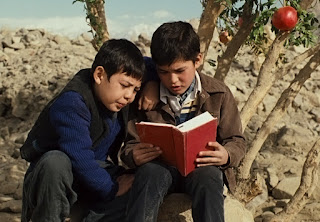
The novel The Kite Runner, written by Khaled Hosseini has several different themes. One of the themes in this book that stood out to me the most is friendship. Amir and Hassan seem to be great friends who face life together as it is. Amir is very wealthy while Hassan is apart of the lower class. Amir always challenges Hassan's loyalty and trust to see if he is a good friend. One example of the tests is that Amir told Hassan to slingshot a rock at a dog and Hassan didn't want to but said he'd do it for Amir. Amir tests his trust because Baba which is Amir's father always compares the two kids. Baba is constantly telling Amir that he should be more like Hassan who is loyal and not self centered. To me this friendship is very questionable because on page 75 Hassan was being harassed and ended up being raped by several random boys on the streets. Another theme that is presented here is betrayal. To me this is considered betrayal because Hassan think he's great friends with Amir, but Amir doesn't show his true loyalty when he is a key witness to Hassan's rape. Amir shows his true colors of who he is. Amir was off in the distance and could see what was happening but did not stand up for his friend at all and ran away. Did Amir not help Hassan because he is embarrassed that Hassan is considered to be dirty and is apart of the lower class? Hassan didn't know Amir was there at all. Amir becomes distant to Hassan and Hassan doesn't know why. I believe that he is distant because he is ashamed that his friend Hassan was raped and he was a bystander to the situation. To me, Amir is a coward. Does Amir really care for Hassan as much as Hassan cares for Amir? For a deeper meaning I think Amir is facing a conflict with himself. If you were Amir in this situation and your friend was being raped would you help save him or would you run away?